
On this page
Homeowners insurance protects what is likely your biggest asset, and most mortgage lenders require it. But policies are full of jargon, limits and exclusions that matter when you file a claim. Here is what a standard policy covers, what it does not and how to get the right protection at a fair price.
What homeowners insurance covers
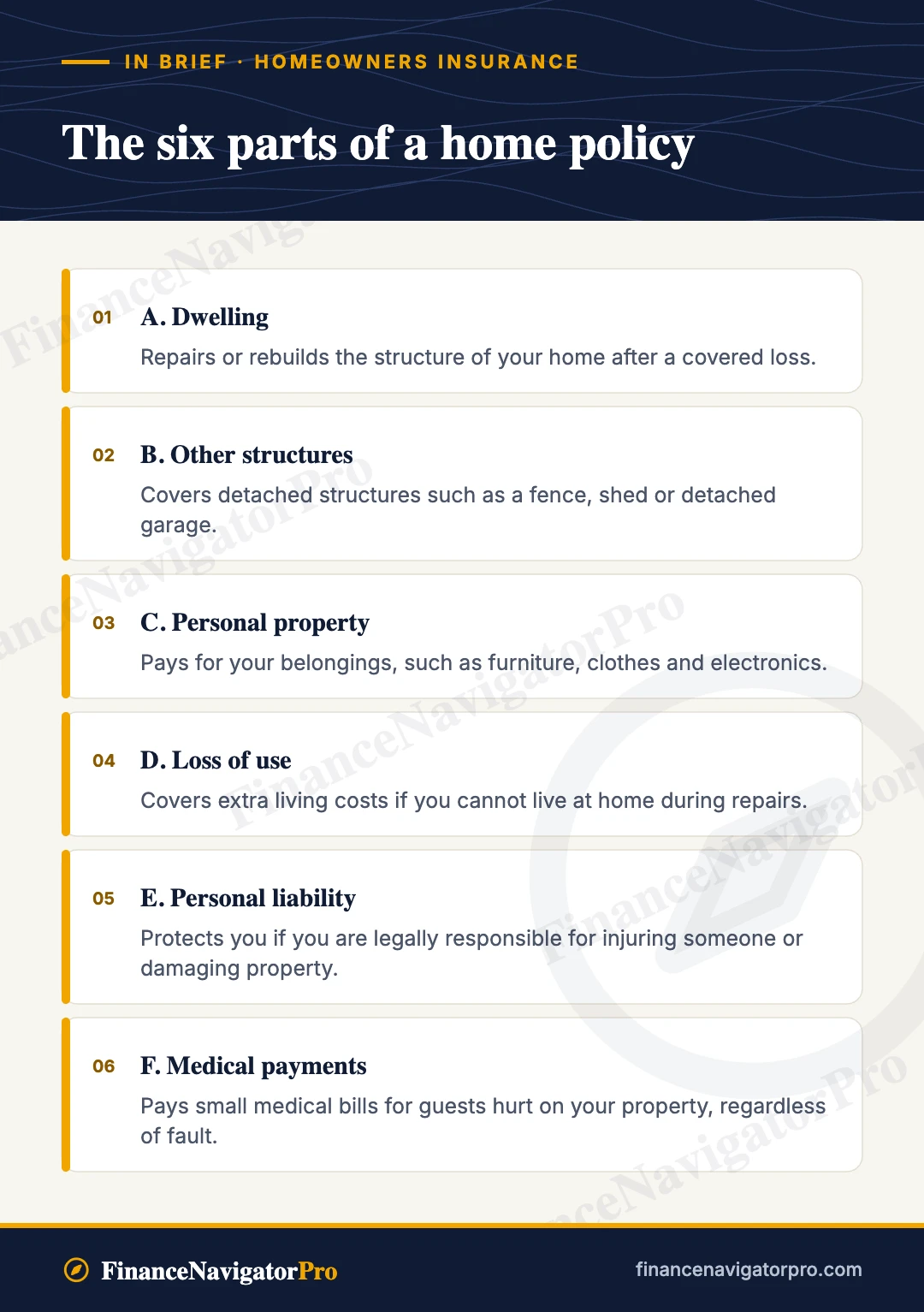
The most common policy for single-family homes is the HO-3. It typically includes six types of coverage:
| Coverage | What it pays for |
|---|---|
| A. Dwelling | Repairing or rebuilding the structure of your home, including attached structures such as a garage |
| B. Other structures | Detached structures such as fences, sheds and detached garages |
| C. Personal property | Your belongings, such as furniture, clothes and electronics, at home or often while traveling |
| D. Loss of use | Extra living costs, such as a hotel and meals, if a covered loss forces you out |
| E. Personal liability | Legal costs and damages if you are responsible for injuring someone or damaging their property |
| F. Medical payments | Small medical bills for guests injured on your property, regardless of fault |
What is usually not covered
- Floods: require separate flood insurance, through the National Flood Insurance Program or a private insurer.
- Earthquakes: require a separate policy or endorsement.
- Wear and tear and maintenance problems: such as an old roof or slow leaks.
- Pests and mold caused by neglect.
- Sewer backup: often excluded unless you add an endorsement.
- High-value items above sub-limits, such as jewelry, unless you schedule them.
Some coastal and high-risk areas also have separate windstorm or hurricane deductibles. Always read the exclusions section of your policy.
Replacement cost vs. actual cash value
Replacement cost pays to repair or replace items with new ones of similar quality. Actual cash value subtracts depreciation, so an older item pays out much less. Replacement cost coverage costs more but provides far better protection. For your dwelling, make sure the coverage limit reflects the full cost to rebuild, which can differ from your home’s market value.
How much coverage do you need?
- Dwelling: enough to rebuild your home at today’s construction costs. Ask your insurer about extended or guaranteed replacement cost to protect against price spikes.
- Personal property: make a home inventory with photos or video to estimate what your belongings are worth.
- Liability: many policies start at $100,000, but more is often recommended if you have significant assets. An umbrella policy can add protection affordably.
Estimate your needs with the homeowners insurance calculator, and see our broader guide to what insurance coverage you need.
What affects your premium
- Location, including weather risk, crime and distance to a fire station
- Rebuild cost, age, size and construction of the home
- Roof age and condition
- Your deductible
- Claims history for you and the property
- Your credit-based insurance score, in most states. See how credit scores affect insurance rates.
- Safety features such as smoke detectors, alarms and storm shutters
How to lower your homeowners insurance cost
- Shop around and compare at least three quotes every year or two.
- Bundle home and auto insurance with one company.
- Raise your deductible if you have savings to cover it. Learn more in insurance deductibles explained.
- Ask about discounts for security systems, new roofs, claim-free years and paperless billing. See insurance discounts most people do not know about.
- Improve your home’s resilience, such as upgrading the roof or plumbing.
- Avoid small claims that could raise your rate more than they pay.
For more ideas, read how to lower your insurance premium.
Homeowners insurance and your mortgage
If you have a mortgage, your lender will usually require homeowners insurance and may collect the premium through an escrow account as part of your monthly payment. Include the cost when you figure out how much house you can afford, and compare quotes before you close on a home. Renting instead? See how much renters insurance costs.
How to file a claim
- Protect your home from further damage, such as covering a broken window, and keep receipts.
- Take photos and video of the damage.
- Contact your insurer promptly and get a claim number.
- Meet the adjuster and share your home inventory.
- Review the settlement and ask questions before you accept it.
Frequently asked questions
Is homeowners insurance required by law?
No state law requires it, but nearly all mortgage lenders require it until the loan is paid off.
Does homeowners insurance cover a roof leak?
It usually covers sudden damage, such as a tree falling on the roof, but not leaks caused by age or lack of maintenance.
Does it cover my belongings outside my home?
Personal property coverage often applies away from home, such as items stolen from your car or a hotel, subject to your deductible and limits.
What is the difference between HO-3 and HO-5?
An HO-5 policy generally covers personal property on a broader, open-perils basis, while an HO-3 covers personal property only for named perils. HO-5 usually costs more.
Ready to shop? Compare the best homeowners insurance companies.
Bottom line
A good homeowners policy covers the full cost to rebuild, uses replacement cost for your belongings and carries enough liability protection. Fill gaps such as flood or earthquake coverage if you are at risk, and shop your policy regularly to keep costs in check. This article is educational and not personal insurance advice.
Keep reading