On this page
The holidays are one of the easiest times of year to overspend. The National Retail Federation expects U.S. holiday retail sales to reach about $1.013 trillion in November and December 2026, up 4.2% from last year. With prices still elevated, a simple holiday budget can help you enjoy the season and still start January debt-free.
Holiday budget in five steps
- Set one total number you can pay in cash by January.
- Split it into gifts, food, travel, decorations and giving.
- List every person you are buying for, with a dollar limit for each.
- Track every purchase as you go.
- Pay any card balance in full when the statement arrives.
Step 1: Set your total holiday budget
Start with what you can afford, not what you spent last year. Look at your checking and savings balances, then subtract upcoming bills and your emergency fund. The amount left, plus anything you can save from your next few paychecks, is your holiday budget. If you use the 50/30/20 rule, holiday spending comes out of your “wants” bucket.
Step 2: Divide it into categories
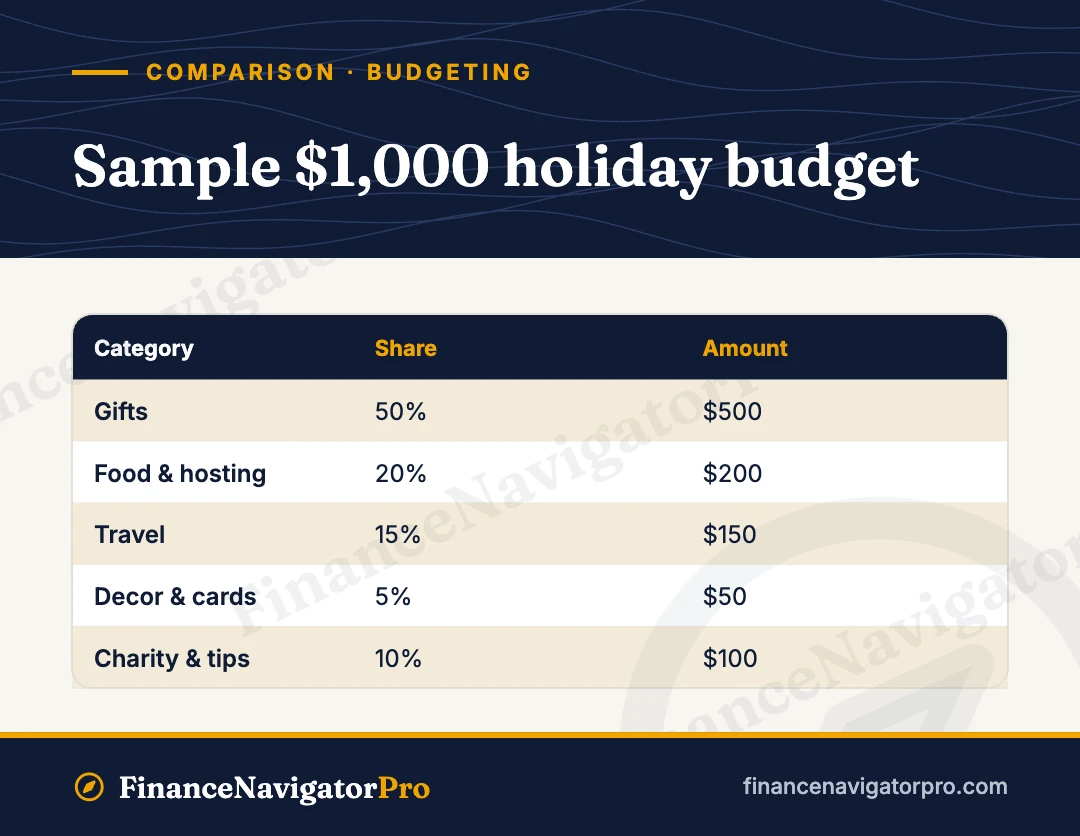
| Category | Share of budget | On a $1,000 budget |
|---|---|---|
| Gifts | 50% | $500 |
| Food and hosting | 20% | $200 |
| Travel | 15% | $150 |
| Decorations and cards | 5% | $50 |
| Charity and tips | 10% | $100 |
Adjust the split to your plans. If you are not traveling, move that money to gifts or savings.
Step 3: Make a gift list with limits
Write down everyone you plan to buy for and assign a dollar amount to each person. Add teachers, coworkers and hosts so they do not become surprise purchases. When your gift total exceeds your category limit, trim the list or the amounts before you shop.
Step 4: Cut costs without cutting joy
- Draw names: suggest a Secret Santa or gift exchange for large families or office groups.
- Set a family spending cap: agree on a limit per gift so no one feels pressured.
- Give experiences or homemade gifts: a meal, a day out or baked goods can mean more than a store purchase.
- Compare prices and use cash back: price-tracking tools, store apps and cash back portals can lower costs.
- Book travel early and be flexible: flying on the holiday itself or midweek is often cheaper.
- Host a potluck: share the cost of holiday meals.
Step 5: Use credit wisely
Credit cards can earn rewards and offer purchase protection, but only if you pay the balance in full. Carrying a holiday balance at a typical card APR can add a significant amount of interest. If you already carry card debt, use cash or debit for holiday spending. A cash back card makes sense only if you can pay it off when the bill arrives. See what interest would cost with the credit card interest calculator.
Be careful with buy now, pay later
Buy now, pay later (BNPL) plans split purchases into installments, often with no interest if you pay on time. They can make it easy to overspend across several stores, and late fees or missed payments can add up. If you use BNPL, track every plan and its due dates in your budget.
Step 6: Start saving for next year now
Divide next year’s holiday budget by 12 and set up an automatic monthly transfer to a separate high-yield savings account. A $1,200 holiday fund needs just $100 a month, and it earns interest while it grows. Plan it with the savings goal calculator.
Already overspent? Here is what to do
- Return or resell gifts you do not need while return windows are open.
- Pay off the highest-rate balance first and make at least the minimum on everything else.
- Consider a 0% balance transfer card if you have good credit and can repay within the promo period.
- Follow our plan to pay off credit card debt.
Frequently asked questions
How much should I spend on the holidays?
Spend only what you can pay off in cash by January without touching your emergency fund. For many people, that means keeping holiday spending within a few percent of annual income.
Is it okay to use a credit card for holiday shopping?
Yes, if you pay the full balance when the statement arrives. Otherwise, interest can quickly erase any rewards.
How do I tell family I am spending less this year?
Be honest and suggest an alternative, such as a gift exchange, a spending cap or a shared experience. Most people appreciate the relief.
When is the best time to shop for holiday deals?
Big sales events like Black Friday and Cyber Monday can offer real discounts, but compare prices first and stick to your list.
Bottom line
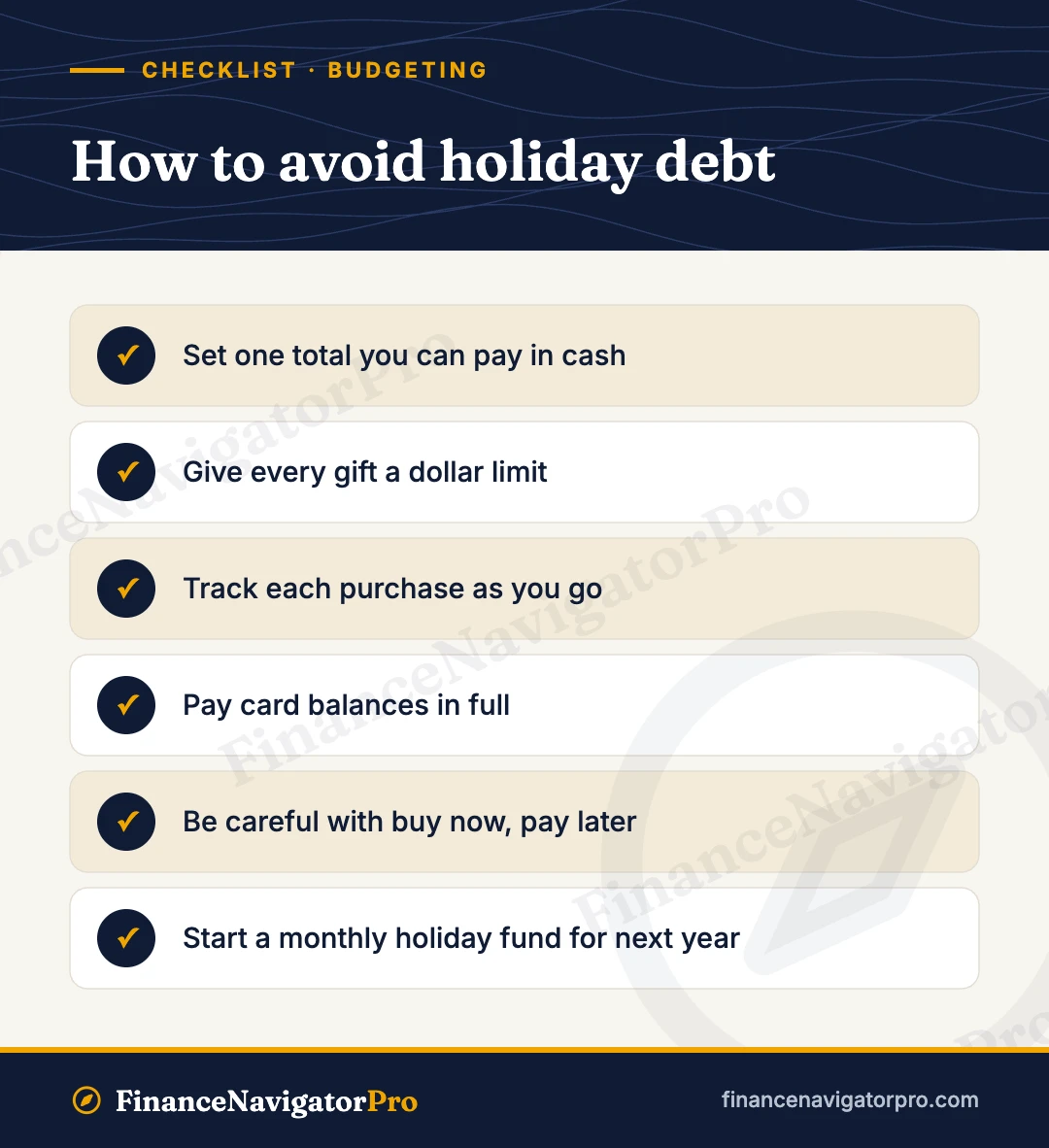
Set one total you can pay in cash, divide it by category, give every gift a limit and track purchases as you go. Pay any card balance in full, be cautious with buy now, pay later, and start a monthly holiday fund for next year. This article is educational and not personal financial advice.
Keep reading