
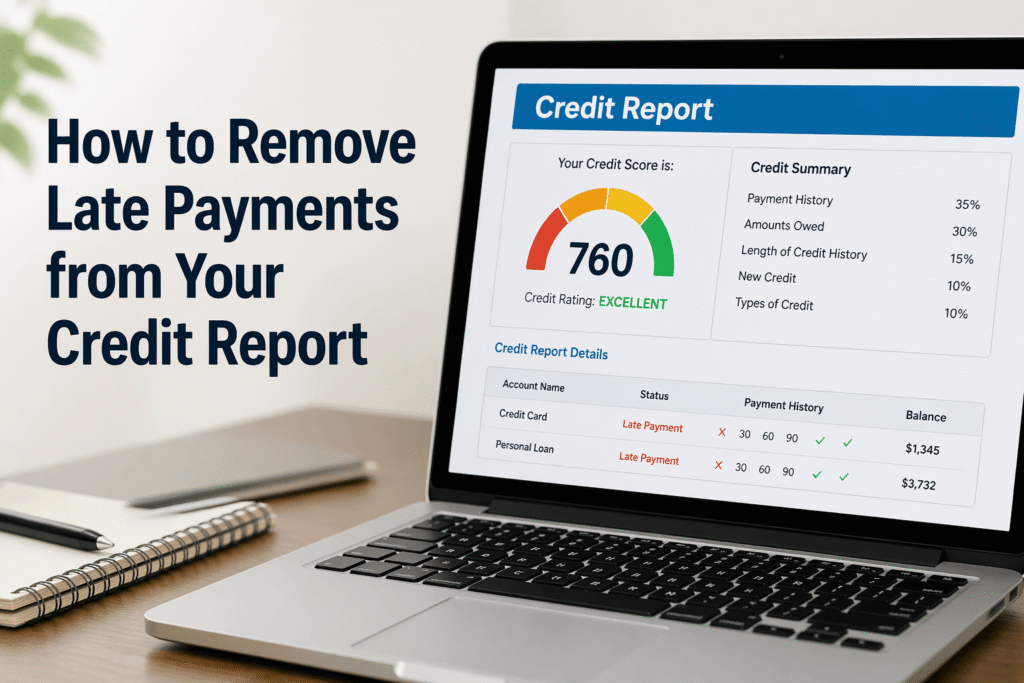
Late payments stay on your credit report for exactly 7 years from the date of the first missed payment. The good news? The damage to your credit score fades significantly after the first two years — so while it’s there for seven, it’s not wrecking your score for seven. Here’s what that actually means for you, and how to recover faster than you might think.
What Is a Late Payment — And When Does It Actually Get Reported?
Here’s the thing most people don’t know: missing a payment doesn’t mean a late payment instantly appears on your credit report. There’s actually a window before the damage shows up — and understanding it can make a real difference.
A payment is technically late the day after it’s due. But credit card issuers and lenders don’t report it to the credit bureaus (Equifax, Experian, and TransUnion) until it’s at least 30 days past due. That’s the threshold that triggers a mark on your report.
Many people confuse a grace period with a late payment buffer. Your grace period (usually 21–25 days after your statement closes) is the time you have to pay before interest kicks in — not before a late payment is reported. Once the actual due date passes and 30 days go by, it’s fair game for the bureaus.
So if you realize you missed a payment on Day 15? You likely still have time to make it right before any damage is done. Pay it immediately, and you may dodge the credit report hit entirely.
Even if you’re late, a payment made before the 30-day mark won’t appear on your credit report. You might get charged a late fee by your lender, but your score stays clean.
How Long Do Late Payments Stay on Your Credit Report?
Let’s be direct: a late payment stays on your credit report for 7 years from the date of the original missed payment. This is set by the Fair Credit Reporting Act (FCRA), and it applies to all three major credit bureaus.
That sounds brutal — seven years is a long time. But here’s the part that most articles gloss over, and it changes everything:
The impact isn’t the same for all 7 years. A late payment from six years ago is very different from one that happened six months ago. Lenders and credit scoring models both weigh recent behavior far more heavily than old history. Over time, that old late payment becomes background noise — still visible, but no longer a red flag.
Think of it like a car accident on your driving record. It’s technically there for years, but most insurance companies care much more about what you’ve done in the past 12–24 months. Your credit works the same way.
There is one nuance worth knowing: the 7-year clock starts from the original delinquency date — the date you first missed that payment. Not when the account was closed. Not when it was sold to a collection agency. The original missed date is what the clock runs from, and it cannot be reset by the lender or a debt buyer.
Does the Impact Fade Over Time?
Yes — and this is where competitors get it wrong by treating all 7 years the same. The reality is that late payment damage follows a decay curve, not a flat line. Here’s how it tends to break down for most consumers:
So does that mean you’re stuck for 7 years? Absolutely not. You’re only stuck from recovering quickly if you don’t take action. With the right steps (which we’ll cover shortly), many people rebuild their scores in 12–24 months, even with a late payment still on file.
How Much Do Late Payments Actually Hurt Your Credit Score?
Not all late payments are created equal. The damage depends on three things: how late the payment was, how good your credit was before the miss, and how recent it is.
Payment history makes up 35% of your FICO score — the single largest factor. So yes, a late payment hits hard. But here’s the breakdown by severity:
| Late Payment Type | Approx. Score Drop | Time to Recover | Severity |
|---|---|---|---|
| 30 days late | 17–80 points | 3–6 months | Moderate |
| 60 days late | 30–100+ points | 6–12 months | High |
| 90+ days late | 50–130+ points | 1–2+ years | Severe |
| Charge-off / Collections | 75–150+ points | 2–5+ years | Critical |
Note: Higher starting credit scores actually see bigger drops from a single late payment. If you had a 780 score, you might drop 90–110 points. If you had a 580 score, the drop might be 20–30 points. This feels counterintuitive but it’s how scoring models work — you have more to lose from a good position.
30-day late: This is the most common and the least damaging. A single 30-day late on an otherwise good credit history hurts, but it’s recoverable. Keep paying on time going forward and you’ll likely see your score bounce back within a few months.
60-day late: This is two missed billing cycles. Lenders start to see a pattern here, and the score impact is noticeably worse. Recovery takes longer, typically 6–12 months of clean payment history.
90+ days late: At this point, the lender may start collection proceedings or charge off the account. The damage is severe and lingers longer. If you’re approaching 90 days, reach out to your lender immediately — most have hardship programs that can help. You can also learn how to contact the credit bureaus directly to dispute any reporting errors.
Real-Life Examples: What This Looks Like in Practice
How to Recover From Late Payments: Your Step-by-Step Action Plan
Here’s the honest truth: you can’t erase time. But you can speed up your recovery and reduce the impact of late payments in real, measurable ways. Here’s exactly how.
Get your free credit reports from all three bureaus at AnnualCreditReport.com — the only federally authorized free source. Review each report carefully. Look for errors in the dates, amounts, or account status of any late payments.
Why it works: You can’t fix what you can’t see. Errors on credit reports are more common than people realize, and a mistake in a reported date can keep a negative item on your report longer than it should be. Start by learning how to check your credit score for free.
If you spot errors — wrong dates, duplicate accounts, payments marked late that were actually on time — file a dispute directly with the credit bureau reporting the error. You can do this online through Equifax, Experian, or TransUnion’s websites. Bureaus are required by law to investigate within 30 days.
Why it works: A successfully disputed item can be removed entirely or corrected, which can provide an immediate score boost. See our guide on how to contact credit bureaus with real scripts that work.
If the late payment is accurate but you have a solid payment history otherwise, write a goodwill letter to your lender. Explain what happened (job loss, medical issue, plain forgetfulness) and politely ask them to remove the late payment as a one-time courtesy.
This doesn’t always work — but it works more often than you’d think, especially with lenders you’ve been with for a long time and have generally paid on time. Be polite, be specific, and be honest.
Why it works: Many lenders have the ability to adjust negative marks as a goodwill gesture. There’s no downside to asking.
This sounds obvious, but it’s the single most powerful thing you can do to prevent future late payments. Set up autopay for at least the minimum payment on every account. Then manually pay the full balance each month if you prefer.
Why it works: Future payment history starts rebuilding your score immediately. Every on-time payment nudges your score upward.
Credit utilization — how much of your available credit you’re using — is the second-biggest factor in your score. If your balances are high, pay them down. If possible, get below 10% utilization for the best results.
Why it works: Unlike payment history, utilization changes take effect the next time your lenders report your balances (usually monthly). Score improvements can appear within 30–60 days. Read our full guide on how credit utilization works.
If your credit took a serious hit, consider a credit-builder loan from a local credit union or a secured credit card. These are designed specifically to help people build positive credit history. Use them lightly, pay on time, and let the positive marks accumulate.
Why it works: Adding positive trade lines to your report dilutes the impact of negative items and builds a pattern of reliability that scoring models reward. Our guide on how to build credit from scratch covers exactly which tools work best.
Can You Remove Late Payments Before 7 Years?
Sometimes — yes. Here are the three legitimate ways to get a late payment removed early:
If anything about the late payment is inaccurate (date, amount, account), file a dispute with the credit bureau. If the lender can’t verify the information, it must be removed.
Ask your lender nicely. Write a goodwill letter explaining your circumstances and request removal as a courtesy. This works best with a single isolated late payment on an otherwise strong account.
If the late payment resulted in a collections account, you may be able to negotiate a pay-for-delete agreement where the collector removes the item in exchange for payment. Not all collectors agree to this, and it’s less effective since newer scoring models often ignore paid collections anyway.
You cannot pay a credit bureau to remove accurate negative information. Any company that promises to “erase” accurate negative marks for a fee is likely running a scam. Legitimate credit repair means disputing errors — nothing more.
Helpful Tools to Track and Speed Up Your Recovery
Recovering from a late payment is easier when you can monitor your progress. Credit monitoring services let you track score changes, set alerts for new items on your report, and catch potential errors quickly. Many are available for free and can help you spot the moment your score starts moving in the right direction.
Identity protection services can also be useful if you suspect your payment history has been affected by fraudulent activity. If an account was opened in your name without your knowledge and fell into delinquency, that’s a dispute situation you’ll want to address fast.
Whatever tools you use, the goal is the same: stay informed, catch problems early, and let time — combined with good habits — do the heavy lifting. If you’re also working on recovering your standing for a major purchase, our guide on auto loans for good, fair, and bad credit is worth reading.
Frequently Asked Questions