
Quick Answer
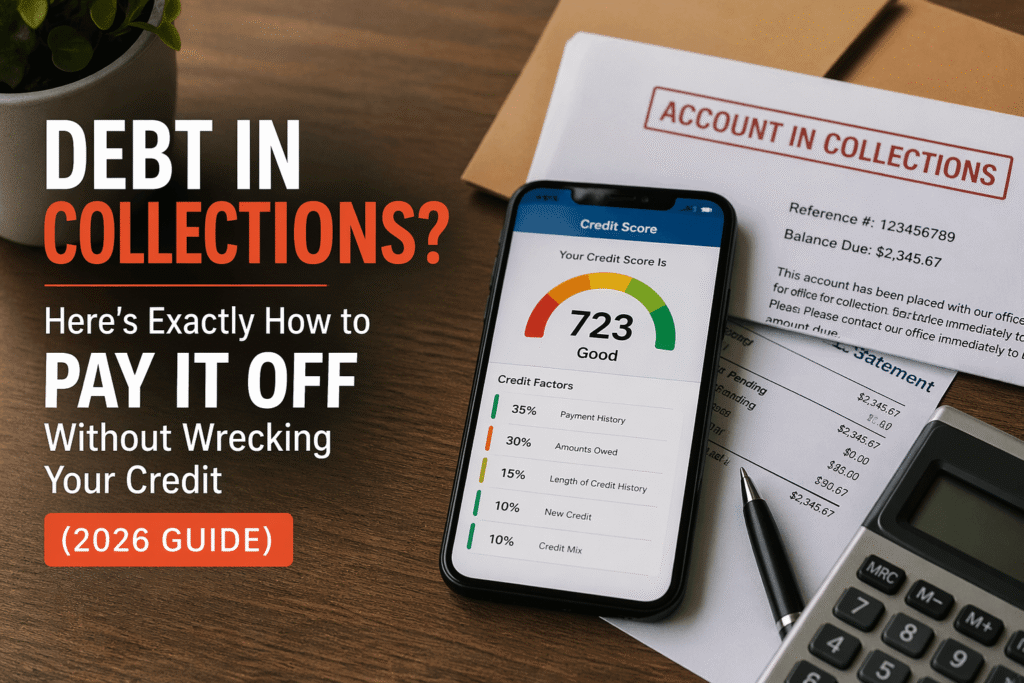
If you have a debt in collections, don’t panic and don’t just hand over your card number the moment a collector calls. First, verify the debt is legitimate and still within the statute of limitations — then negotiate a pay-for-delete or a settlement for less than the full amount before paying a single dollar. Whatever you do, never ignore a collection account indefinitely; it can lead to lawsuits, wage garnishment, and years of credit damage.
- Quick Summary: What You Need to Know
- What Happens When a Debt Goes to Collections?
- Should You Pay Collections or Not?
- How to Pay Collections Without Hurting Your Credit
- Negotiation Strategies That Actually Work
- Mistakes to Avoid When Dealing With Collections
- Your Step-by-Step Action Plan
- Debt Collections Options Compared
- Real-Life Stories: What Other People Did
- Tools That Can Help You Through This
- Frequently Asked Questions
Quick Summary: What You Need to Know
Always verify the debt in writing before paying — collectors can be wrong.
You have the right to request a debt validation letter within 30 days of first contact.
Negotiate a pay-for-delete agreement to potentially remove the collection from your credit report.
Settling for less than the full balance is common — collectors often accept 40–60% of the original amount.
Paying a collection does NOT automatically remove it from your credit report, but it changes the status to “paid.”
The CFPB and FDCPA give you real legal protections — use them.
Never make a payment on a very old debt without checking your state’s statute of limitations first.
What Happens When a Debt Goes to Collections?
Here’s the thing most people don’t realize — a debt doesn’t jump straight into collections overnight. There’s a whole process that happens first, and understanding it gives you more leverage than you might think.
When you miss payments on a credit card, medical bill, or personal loan, the original creditor typically waits 90 to 180 days before they give up trying to collect themselves. At that point, they have two options: sell your debt to a third-party collection agency for pennies on the dollar, or hire a collection agency to collect on their behalf.
Once that happens, you’ll start getting calls and letters from a company you’ve probably never heard of — asking you to pay money you may not immediately recognize. It feels overwhelming. A lot of people freeze up or avoid dealing with it altogether. That’s understandable, but it’s also the worst move you can make.
What appears on your credit report
A collection account can show up on your credit report as a separate negative item — separate from the original missed payments. That means your score can take a double hit. Under the current credit scoring models, a collection account can stay on your report for up to seven years from the date of the original delinquency, regardless of whether you pay it or not.
The good news? Newer FICO and VantageScore models — especially FICO 9 and VantageScore 4.0 — ignore paid collection accounts entirely. So if a lender is using a newer model, a paid-off collection may not hurt your score at all. Honestly, that’s a bigger deal than most people realize.
Want to understand your full credit picture first? See our guide: Average Credit Score in the U.S. (2026)
Should You Pay Collections or Not?
This is genuinely one of the most common questions people have, and the answer isn’t as simple as “yes, always pay.” It depends on a few things.
- →The debt is recent (within the last 2–3 years) and still significantly impacting your credit score.
- →You’re planning to apply for a mortgage, car loan, or other major credit in the near future.
- →You can negotiate a pay-for-delete or a lower settlement amount.
- →The collection agency is threatening legal action and you want to avoid a lawsuit or judgment.
- →The debt is very old and close to — or past — your state’s statute of limitations. Making even a small payment can reset the clock in some states.
- →You can’t verify the debt is legitimate or actually yours.
- →The seven-year reporting window is almost up. If a collection is going to fall off your report in six months anyway, paying it may not be worth it.
Most people don’t realize this, but collection agencies buy debt for very little — sometimes just 1–4 cents per dollar owed. That gives you real negotiating power. They’re often willing to settle because even a partial payment is pure profit for them.
How to Pay Collections Without Hurting Your Credit
This is where strategy really matters. If you’re going to pay, pay smart. There’s a right way to handle this that can minimize the damage — and potentially even improve your score.
Get everything in writing first
This is non-negotiable. Never pay a collection agency based on a phone call alone. Before you send a single dollar, get a written agreement that spells out exactly what will happen after you pay — especially if you’re negotiating a pay-for-delete or a settlement.
A pay-for-delete is exactly what it sounds like: you agree to pay the debt (in full or as a settlement), and in exchange, the collection agency agrees to remove the account from your credit report entirely. Not just mark it as paid — actually delete it.
Not all collection agencies will agree to this. Some flat-out refuse. But it’s absolutely worth asking, especially if the debt is small or if the agency has the flexibility to negotiate. Always get the pay-for-delete agreement in writing, signed, before you pay.
Can you settle for less?
Yes, almost always. Settling for less than the full balance is very common — more common than most people know. Collection agencies frequently accept 40–70% of the original amount, especially if you can offer a lump-sum payment upfront rather than a payment plan.
When negotiating, start low. If you owe $1,000, offer $300–$400 first. They may counter with $600 or $700. Meet somewhere in the middle. Don’t feel pressured to accept the first offer.
Does paying improve your credit score?
It depends on which scoring model your lender is using. With older FICO models (still widely used), paying a collection changes its status from “unpaid” to “paid” — but the negative mark can still remain on your report for the full seven years. Lenders generally view a paid collection more favorably than an unpaid one, even if the score change is small.
With newer models like FICO 9 or VantageScore 4.0, paid collections are ignored completely. So if your lender uses a modern scoring model, paying off a collection could give your score a noticeable boost.
Negotiation Strategies That Actually Work
Negotiating with a debt collector can feel intimidating. It doesn’t have to be. These agencies deal with thousands of accounts — yours isn’t special to them. That works in your favor.
Mistakes to Avoid When Dealing With Collections
Honestly, some of these mistakes are so common they’ve become “common wisdom” — and they can seriously backfire.
Debt collection errors are more common than you’d think. The wrong amount, a debt that’s already been paid, or even a debt that belongs to someone else entirely. Always verify first.
Hoping it goes away doesn’t work. Ignoring a collection can result in a lawsuit, a court judgment, and in some states, wage garnishment. Even if you can’t pay the full amount, contact the agency and try to negotiate.
If a debt is past your state’s statute of limitations (typically 3–6 years, depending on the state and debt type), you may no longer be legally required to pay it. Making even a partial payment or verbally acknowledging the debt in some states can reset the statute of limitations, giving collectors new legal power over you.
Never set up a payment plan verbally. Get every detail in writing: the total amount, the payment schedule, and what happens after you complete payments. Some collectors have been known to continue collecting after a debt is settled.
Pay by money order or certified check whenever possible. Giving a collector direct access to your bank account is a significant risk. If something goes wrong, it’s much harder to reverse.
Your Step-by-Step Action Plan: How to Pay a Debt in Collections
Note the agency name, address, phone, and the amount they claim you owe. Don’t provide any personal or payment information yet.
Mail it certified with return receipt within 30 days of first contact. Ask for proof the debt is yours, the original creditor’s name, and the amount breakdown.
Check the amount, the original creditor, and look for any errors. If they can’t validate, they must stop collection activity.
If the debt is old, verify whether it’s still within the legal window for collectors to sue you. This changes your negotiating position significantly.
Go to AnnualCreditReport.com and review all three bureaus. Confirm the collection is actually showing up and note the original delinquency date.
Call the collector (or send a written offer), start at 30–40% of the balance, and request either a pay-for-delete or a “paid in full” designation in writing.
This is critical. Do not pay until you have a signed letter confirming the settlement terms.
Use a money order, cashier’s check, or bank transfer. Avoid debit cards and never provide your routing number verbally.
Save the validation letter, your payment confirmation, and the written agreement. You may need these if the account reappears on your credit report.
Use a free credit monitoring tool to track when the collection is updated or removed. If a paid account still shows as unpaid after 30–60 days, file a dispute with the credit bureau.
📌 Rebuilding after collections? Read: How to Build Credit From Scratch and Check Your Credit Score for Free
Debt Collections Options Compared
| Option | Cost | Credit Impact | Best For |
|---|---|---|---|
| Pay in Full | 100% of balance | Positive — status changes to paid; ignored by newer scoring models | Those with the funds who want the cleanest resolution and best chance at credit recovery |
| Settle the Debt | Typically 30–70% of balance | Moderate positive — shows as “settled”; some lenders view as slight negative vs. paid in full | Those who can’t afford full payment but can offer a lump sum; great for negotiating pay-for-delete |
| Payment Plan | 100% of balance (sometimes more with fees) | Minor positive over time; slower improvement than lump sum | Those who need to spread payments; less negotiating leverage but better than ignoring |
| Ignore the Debt | Potentially $0 — but high hidden costs (lawsuits, garnishment) | Very negative — remains on report for 7 years; opens door to legal action | Not recommended in most cases; only consider if debt is clearly time-barred and you have no assets at risk |
Swipe left to see full table on mobile.
Real-Life Stories: What Other People Did
Tools That Can Help You Through This
Dealing with collections is stressful enough without trying to track everything manually. A few tools can genuinely make a difference here — and most are free or low-cost.
Credit Karma or Experian’s free service let you track changes to your credit report in real time. You’ll get notified when a collection account is updated or removed.
The only truly free source for your official credit reports from all three bureaus — Equifax, Experian, and TransUnion. Pull these before negotiating anything.
If your debt situation is complex — multiple collections, creditors threatening lawsuits — a nonprofit NFCC-certified counselor can provide guidance at little to no cost.
Services that monitor for new accounts or collections opened in your name — especially valuable if you’re worried about mistaken identity in collections, which happens more often than people realize.
Frequently Asked Questions
Disclaimer: This guide is for informational purposes only and does not constitute legal or financial advice. Laws vary by state. Consider consulting a certified credit counselor or attorney for advice specific to your situation.