Sound familiar?
If you’re reading this, you’re probably in one of a few situations: you’ve been denied a credit card, you have little or no credit history, or you’re trying to rebuild after some rough patches. Maybe you’ve heard the terms “secured” and “unsecured” credit card thrown around but aren’t totally sure what they mean — or which one’s actually going to help you.
You’re in the right place. I’m going to walk you through everything, and I promise to keep it real. No textbook definitions. No confusing finance jargon. Just the stuff you actually need to know to make a smart decision in 2026.
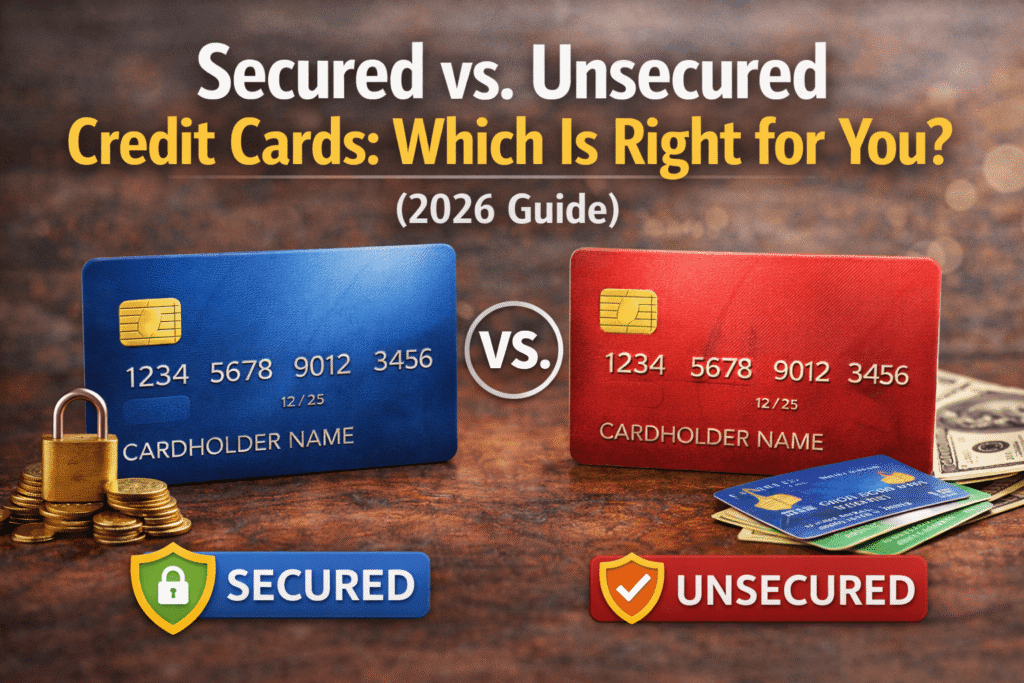
What Is a Secured Credit Card? (Plain English, Please)
A secured credit card works almost exactly like a regular credit card — you swipe it, buy stuff, get a bill, pay it off. The big difference? You have to put down a cash deposit upfront.
Think of it like a security deposit when you rent an apartment. The landlord holds your deposit just in case you don’t pay or cause damage. With a secured card, the bank holds your deposit just in case you don’t pay your bill.
Here’s how it typically works:
- You apply and get approved (much easier than a regular card)
- You put down a deposit — usually between $200 and $500, though it varies
- That deposit becomes your credit limit
- You use the card like normal — groceries, gas, Netflix, whatever
- You pay your bill every month
- Your payment activity gets reported to the credit bureaus, which helps build your credit score
The best part? If you use the card responsibly, most issuers will upgrade you to an unsecured card after 6–12 months and give your deposit back. It’s basically a short-term investment in your credit future.
Who is a secured card for? Pretty much anyone who:
- Has no credit history (students, recent immigrants, young adults)
- Has damaged credit from past mistakes
- Got rejected for a regular credit card
- Wants to start fresh and do things right
What Is an Unsecured Credit Card?
An unsecured credit card is what most people think of when they hear “credit card.” There’s no deposit required. You apply, they check your credit, and if you qualify, they hand you a line of credit based on your creditworthiness.
This is the kind of card that comes with rewards points, cash back, travel miles, and all those shiny perks you see advertised constantly. The catch? You need decent credit to get approved.
Most unsecured cards want to see:
- A credit score of at least 580–670 for basic cards
- 580+ for entry-level or “fair credit” cards
- 670+ for rewards cards with real benefits
- 720+ for the premium stuff
Here’s where most people mess up: they apply for an unsecured card when they don’t meet the requirements, get rejected, and that rejection actually dings their credit score slightly (because of the hard inquiry). Then they’re in an even worse spot.
The smarter move is to know where you stand before you apply — and if your credit isn’t there yet, use a secured card to build it up first.
Secured vs. Unsecured Credit Cards: Side-by-Side Comparison
| Feature | Secured Card | Unsecured Card |
|---|---|---|
| Deposit Required | Yes ($200–$500 typical) | No |
| Approval Difficulty | Easy — designed for low/no credit | Moderate to hard |
| Credit Score Needed | No score or bad credit OK | Usually 580+ minimum |
| Credit Limit | Equal to your deposit | Set by lender based on credit |
| Reports to Bureaus | Yes (Equifax, Experian, TransUnion) | Yes |
| Annual Fees | Some have fees ($25–$50) | Varies widely ($0–$95+) |
| Rewards / Perks | Rare (some offer cash back) | Common — cash back, points, miles |
| Risk Level | Low — you control the limit | Higher — easier to overspend |
| Upgrade Path | Yes — to unsecured after good behavior | Already unsecured |
| Best For | Building or rebuilding credit | Established credit users |
Real-Life Scenarios: Which Card Fits Your Situation?
This is where it gets practical. Let’s run through a few real situations and figure out what makes sense.
Maybe you just turned 18, or you recently moved to the U.S., or you’ve just always paid cash for everything. You’re basically a ghost to the credit bureaus — which sounds fine, but it actually makes it really hard to get approved for anything, including apartments and car loans.
Life happens. A medical emergency, a job loss, a rough breakup that tanked your finances — I’ve heard it all, and judgment-free, it’s more common than you think. If your score is in the 500s or below, you’re going to have a tough time with most unsecured cards.
You’re in the middle zone. Not terrible, not great. You might get approved for some unsecured cards, but they’ll probably come with high interest rates and low limits, and the rewards won’t be anything special.
You’ve done the work. You don’t need a secured card — skip straight to an unsecured card and start earning rewards for your everyday spending. At this point, the world of credit cards opens up significantly: cash back on groceries, travel points, 0% intro APR offers, and more.
Pros & Cons — Honest Take (No Sugarcoating)
Secured Credit Cards
|
Pros
✓Easy to get approved — even with no or bad credit
✓Builds real credit history with all 3 bureaus
✓Low risk — you set your own spending ceiling
✓Upgrades to unsecured over time
✓Good for building financial discipline
|
Cons
✗Requires upfront deposit (cash tied up)
✗Lower credit limits than unsecured cards
✗Some charge annual fees for a basic product
✗Few or no rewards programs
✗High APR if you carry a balance
|
Unsecured Credit Cards
|
Pros
✓No deposit needed — nothing tied up
✓Higher credit limits available
✓Rewards, cash back, and travel perks
✓Can open doors to premium cards over time
✓Builds credit just as effectively
|
Cons
✗Requires decent credit to qualify
✗Easy to overspend without a hard ceiling
✗High interest rates if you carry a balance
✗Multiple rejections hurt your credit score
✗Some cards have hidden fees
|
Which One Should YOU Choose? (Decision Guide)
Here’s a simple way to think about it:
|
🔒 Choose a Secured Card if…
→Your credit score is below 580 (or no score at all)
→You’ve been rejected for regular credit cards
→You want a low-risk way to start or restart your credit journey
→You want to build discipline before accessing higher limits
|
💳 Choose an Unsecured Card if…
→Your credit score is 580 or higher
→You want to earn rewards on everyday spending
→You have a stable income and can pay the balance monthly
→You’ve already built credit and are ready to upgrade
|
One thing I want to be clear about: there is zero shame in getting a secured card. I’ve seen people treat it like a step backward — it’s not. It’s a strategic tool. Some of the most financially responsible people I know started with a secured card and used it as a launchpad.
Proven Strategies to Build Credit Fast in 2026
Whether you’re starting with a secured card or just trying to maximize an unsecured one, here are the strategies that actually work.
Common Mistakes to Avoid (I’ve Seen These Wreck People’s Credit)
A lot of people think carrying a small balance each month helps your credit score. It doesn’t — that’s a myth. Carrying a balance just means you’re paying interest for no reason. Pay your bill in full every month. Your score cares that you pay on time and keep utilization low, not that you carry a balance.
The length of your credit history matters. Your first card is usually your oldest account, and closing it can shorten your average account age and drop your score. Even if your first secured card has a small limit and no rewards, consider keeping it open with a small recurring charge. The account age is valuable.
Some secured cards have steep fees — annual fees, monthly maintenance fees, processing fees. Before you apply, read the fine print. A card with a $75 annual fee on a $200 deposit is eating up a huge percentage of your credit line. Look for cards with low or no fees.
Technically, paying the minimum keeps your account in good standing. But it means you’re carrying a balance and paying interest — sometimes 25%+ APR. On a credit-building journey, that interest adds up fast. Pay the full balance whenever possible.
You’re entitled to free credit reports from all three bureaus every year at AnnualCreditReport.com. Check them. Errors happen more than you’d think — wrong payment dates, accounts that aren’t yours, outdated collections. Disputing and removing errors can give your score a meaningful boost with zero extra effort.
Top Card Options to Consider in 2026
I want to be upfront here: I’m not telling you these are the only good cards out there, and your situation might call for something different. But these are solid starting points that I’d genuinely recommend looking into based on where you are financially.
There’s no annual fee, you earn 2% cash back at gas stations and restaurants (and 1% on everything else), and Discover automatically reviews your account after 7 months to see if you qualify for an upgrade to unsecured. Your deposit starts at $200. It’s one of the easier ones to get approved for when you’re starting from scratch — and the cash back is a rare bonus for a secured card.
You might qualify for a $200 credit line with a deposit as low as $49, $99, or $200 depending on your creditworthiness. That means less cash tied up. There’s no annual fee, and Capital One is known for being responsive about credit limit increases after consistent on-time payments.
You get 1.5% cash back on all purchases — a solid flat rate — and there’s a $39 annual fee. It’s designed for people in the credit-building phase who are ready for an unsecured card but aren’t quite at the “premium” level yet. Capital One also offers automatic credit limit review after 6 months.
The Chase Freedom Unlimited offers 1.5% cash back on all purchases, 3% on dining and drugstores, and 5% on travel booked through Chase — with no annual fee. It’s one of the best entry-level rewards cards out there and pairs well with other Chase cards. Requires good to excellent credit.
Remember: before applying for any of these, check your current credit score so you’re applying for cards in your range. Most major banks offer free credit score access, and tools like Credit Karma or Experian’s free tier can give you a solid baseline.
Frequently Asked Questions
Does a secured card actually build credit?
Yes — as long as the issuer reports to all three major credit bureaus (Equifax, Experian, TransUnion). Most reputable secured cards do. Your on-time payments and low utilization will show up on your credit report just like any other card. The result? A real, improving credit score over time.
Can you upgrade a secured card to unsecured?
Most of the time, yes. Many issuers will automatically review your account after 6–12 months of responsible use. Others require you to call and request it. When you upgrade, your deposit is returned and your account typically stays open — which is great for your credit history length.
Do you get your deposit back?
Yes, when you upgrade to unsecured, close the account in good standing, or the issuer decides you’ve earned it. The deposit is fully refundable — it was never “spent.” The only time you’d lose it is if you default on the account and your payments can’t cover what you owe.
Can a secured card hurt your credit?
Only if you misuse it. Late payments, maxing it out, or closing it too early can all have negative effects. Used correctly — low balance, paid in full monthly — it can only help.
What’s the minimum credit score for an unsecured card?
It depends on the card. Some “fair credit” unsecured cards will consider scores as low as 580. Standard cards usually want 670+. Premium rewards cards often require 720+. Use a pre-qualification tool (soft pull, won’t affect your score) to see your odds before applying.
How long does it take to build credit with a secured card?
You can start seeing your score generated within 3–6 months of opening your first account. After 12 months of consistent on-time payments and low utilization, many people see scores in the 650–700 range — enough to qualify for a decent unsecured card.
Should I have both a secured and an unsecured card?
Potentially, yes — having more than one type of credit account can help your “credit mix” score factor. But don’t rush it. Start with one card, master it, then consider adding a second after 6–12 months.
Final Thoughts: There’s No “Right” Card — Just the Right One for You
There’s no shame in a secured card. There’s no magic in an unsecured one. The right card is whatever helps you move forward from where you actually are right now — not where you wish you were.
If your credit is starting at zero or below, a secured card is one of the smartest financial moves you can make in 2026. It’s not a consolation prize. It’s a strategy.
If you’ve already done the work and your score reflects it, an unsecured card lets you start getting rewarded for the responsible habits you’ve built.
You can fix this faster than you think. The path is straightforward, it just takes a little consistency. Pick the right card for your situation, use it wisely, and your future self will thank you.
Got questions about a specific card or your situation? Drop them in the comments — I read every one.
This post may contain affiliate links. We only recommend products we genuinely believe in. Opinions are our own.