Having fair credit can feel like being stuck in the middle. You don’t qualify for the flashiest rewards cards, but you’re not starting from scratch either. The good news? There are solid credit cards for fair credit that offer real rewards, low fees, and a clear path to better credit.
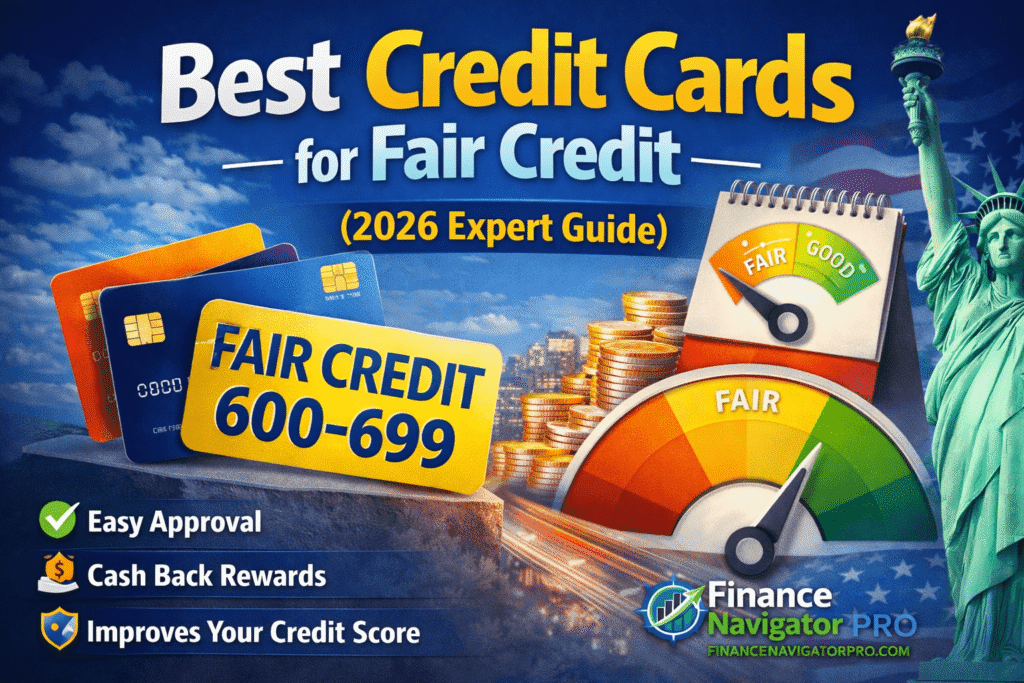
Fair credit typically means a FICO score between 580 and 669. A 650 credit score puts you squarely in that range. At that level, you’ll face higher APRs and fewer instant approvals — but you have more options than you might think. This guide breaks down the best picks for 2026, what to watch out for, and how to reach good credit within 12–18 months.
⚡ Key Takeaways
- Fair credit is generally a FICO score of 580–669.
- You can qualify for rewards cards with fair credit — secured cards aren’t your only option.
- Many credit cards for fair credit have no annual fee.
- Responsible use of the right card can help you reach good credit in 12–18 months.
- Always pre-qualify before applying to avoid unnecessary hard inquiries on your report.
What Is Considered Fair Credit?
Credit scores are not one-size-fits-all. The two most common scoring models are FICO and VantageScore, and they define “fair” slightly differently.
- FICO Score: Fair credit = 580–669. Good = 670–739. Very Good = 740–799.
- VantageScore: Fair credit = 601–660. Good = 661–780.
Most credit card issuers use FICO scores. If your score is around 650, you’re firmly in fair credit territory. Lenders see you as a moderate risk — meaning they’ll approve you, but they’ll charge higher interest rates to offset that risk.
Here’s what that looks like in practice for fair credit score credit cards:
- APRs typically range from 24% to 30%, vs. 18%–22% for good credit.
- Starting credit limits are often lower — expect $300–$1,500.
- Premium perks like airport lounges or 5x travel rewards aren’t available at this tier.
The key insight: fair credit is a temporary status. With the right credit cards for 650 credit score and consistent habits, most people can climb to good credit within a year.
How We Chose the Best Fair Credit Cards (Methodology)
We reviewed dozens of cards available to consumers with FICO scores of 580–669. Here’s what mattered most in our evaluation:
- Approval odds: Does the issuer clearly target fair credit applicants? Do they offer a pre-qualification tool?
- Annual fee: We prioritized no-fee and low-fee options. A $39–$75 annual fee can be worth it — but only when rewards justify it.
- APR: Lower is always better, especially if you might carry a balance.
- Rewards structure: Cash back or points that are easy to understand and redeem.
- Upgrade potential: Can you graduate to a better card without closing your account?
- Credit bureau reporting: All cards on this list report to Equifax, Experian, and TransUnion. Non-negotiable for building credit.
Best Credit Cards for Fair Credit (2026)
Below are our top picks for fair credit cards this year. Each card has been selected for its combination of accessibility, value, and credit-building potential.
Best Overall
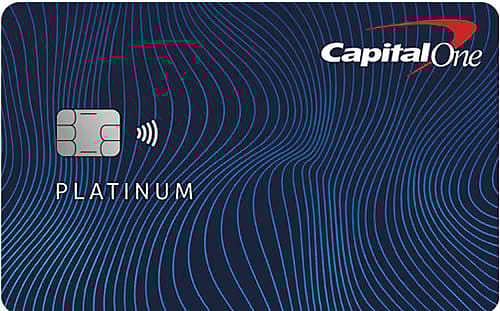
1. Capital One Platinum Credit Card
The Capital One Platinum is one of the most straightforward good credit cards for fair credit. There’s no annual fee, no rewards complexity, and Capital One automatically considers you for a higher credit limit after just six months of on-time payments.
✅ Pros
- No annual fee
- Automatic credit limit reviews at 6 months
- No foreign transaction fees
- Free CreditWise credit monitoring
❌ Cons
- No rewards or cash back
- High APR (~29.99%)
- Low starting credit limit
Best Cash Back
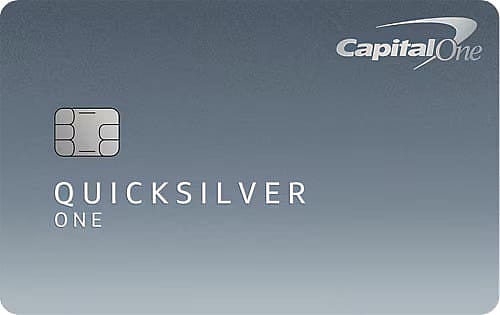
2. Capital One QuicksilverOne Cash Rewards Credit Card
If you want a fair credit card that actually pays you back, the QuicksilverOne delivers. You earn 1.5% cash back on every purchase — no rotating categories, no activation needed. Spend $2,600/year and the cash back covers the $39 annual fee.
✅ Pros
- Unlimited 1.5% cash back on all purchases
- Automatic credit limit review after 6 months
- No foreign transaction fees
- Roadside assistance included
❌ Cons
- $39 annual fee
- High variable APR
- Not ideal if you carry a balance
Best for Gas & Dining
3. Discover it® Chrome Card
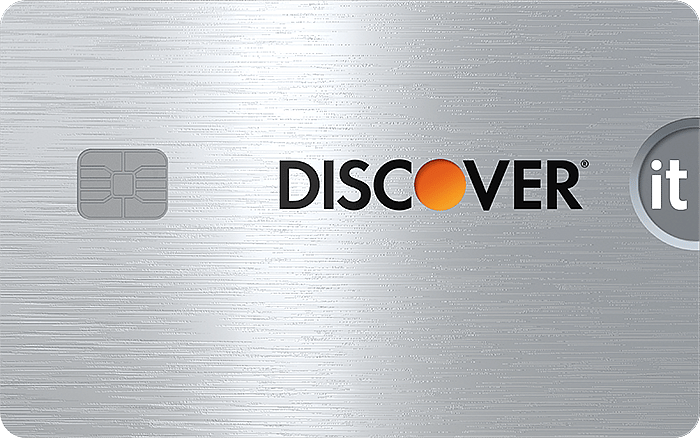
Discover is known for being more lenient with fair credit applicants. The Chrome card earns 2% cash back at gas stations and restaurants (up to $1,000 in combined purchases per quarter), plus 1% on everything else. Discover also matches all the cash back you earn in your first year.
✅ Pros
- No annual fee
- Cash back match in first year
- No foreign transaction fees
- Lower APR floor than many fair-credit cards
❌ Cons
- 2% rewards capped at $1,000/quarter
- Student version requires enrollment verification
- Discover less accepted internationally
Easiest Approval
4. Credit One Bank Platinum Visa
Credit One targets people at the lower end of the fair credit range. It’s not the best deal financially — the annual fee is high — but if you’ve been declined elsewhere, it provides an entry point. The 1% cash back on eligible purchases is a bonus.
✅ Pros
- Accepts lower credit scores
- 1% cash back on eligible purchases
- Free monthly credit score
❌ Cons
- High annual fee (up to $99)
- High APR
- Fee structure can be confusing

Best Simple Approval
5. Mission Lane Visa® Credit Card
Mission Lane has made fair credit their focus. The application is simple and fast, and they’re transparent about fees upfront. Annual fees vary based on your credit profile — there’s a chance you’ll qualify for a no-fee version. Credit limit increases are available after demonstrating responsible use.
✅ Pros
- Clear, transparent terms
- Some applicants receive $0 annual fee
- Credit limit increase path
- Reports to all 3 bureaus
❌ Cons
- Annual fee may be $59
- No rewards on standard version
- Smaller brand with fewer perks

Best Secured-to-Unsecured Path
6. Discover it® Secured Credit Card
If your score is at the low end of fair (below 600), a secured card may be the right bridge. The Discover it Secured stands out because it has no annual fee, earns real rewards, and Discover automatically reviews your account starting at seven months to see if you can graduate to an unsecured card — returning your deposit.
✅ Pros
- No annual fee
- Earns real cash back rewards
- Automatic upgrade reviews starting at 7 months
- Cash back match in first year
❌ Cons
- Requires security deposit ($200 minimum)
- High APR for carrying a balance

Best Credit Cards for Fair Credit With No Annual Fee
Paying an annual fee only makes sense when rewards more than cover the cost. For many, the best strategy is a credit card for fair credit with no annual fee — build credit for free, then upgrade later.
| Card | Annual Fee | Rewards | Credit Score Needed |
|---|---|---|---|
| Capital One Platinum | $0 | None | 580–669 |
| Discover it® Chrome | $0 | 2% gas/dining; 1% other | 580–669 |
| Discover it® Secured | $0 | 2% gas/dining; 1% other | No minimum (secured) |
| Mission Lane Visa (select) | $0–$59 | Varies by offer | 580–650 |
Credit Cards for 650 Credit Score
A 650 credit score sits right in the middle of the fair credit range. Here’s what you need to know before applying for a fair credit credit card.
Can you get approved? Yes. Capital One Platinum, QuicksilverOne, and Mission Lane all explicitly target scores in the 580–669 range. A 650 score gives you a reasonably good shot with most cards on this list.
What are realistic expectations? Expect a starting credit limit of $300–$1,000, an APR in the 24%–30% range, and limited premium benefits. Your goal right now is to establish a track record.
How to increase your approval odds:
- Use the issuer’s pre-qualification tool (soft pull, no score impact) before applying.
- Make sure your reported income is accurate and includes side gig or freelance earnings.
- Avoid applying to multiple cards in a short period.
- Pay down existing card balances to lower your utilization before applying.
Are There Credit Cards for Fair Credit With Instant Approval?
You’ve probably seen ads promising credit cards for fair credit instant approval. Here’s the honest truth about what that means.
Pre-qualification ≠ guaranteed approval. Pre-qualification uses a soft credit pull (no score impact) to show you cards you’re likely to qualify for. A full application triggers a hard inquiry and a real underwriting decision.
“Instant decision” means you get an answer quickly — sometimes in seconds — not that approval is guaranteed. Many credit card offers for fair credit do provide instant decisions, especially from Capital One and Discover.
- Always start with the issuer’s pre-qualification check before applying.
- If pre-qualified, proceed to the full application — approval is more likely but not certain.
- If denied, wait 3–6 months before applying again to minimize hard inquiry damage.
Fair Credit vs. Average Credit — What’s the Difference?
The terms “fair credit” and “average credit” are often used interchangeably. Average credit credit cards and credit cards for average credit generally refer to the same products as fair credit cards.
| Term | Typical FICO Range | What Lenders See |
|---|---|---|
| Fair Credit | 580–669 | Moderate risk; higher APR offered |
| Average Credit | 630–689 | Similar; slightly more options at upper end |
| Good Credit | 670–739 | Lower risk; better rates & rewards |
If your score is 660–680, you’re on the upper edge. You may start qualifying for entry-level good-credit cards, especially if your income and utilization look strong.
How to Get Approved for a Credit Card With Fair Credit
- Lower your credit utilization. If you’re using more than 30% of your available credit, pay down balances before applying.
- Check your credit report for errors. Visit AnnualCreditReport.com and dispute any inaccuracies. A single error can drop your score 20–50 points.
- Report your full income. Include freelance or gig income. Issuers want to see you can afford repayment.
- Pre-qualify first. Always use the issuer’s pre-qualification tool before submitting a full application.
- Don’t apply to multiple cards at once. Each hard inquiry drops your score by about 5 points.
Secured vs. Unsecured Cards for Fair Credit
If your score is below 600 or you’ve been declined for unsecured cards, a secured card is often the smartest bridge.
How secured cards work: You put down a cash deposit (usually $200–$500) that becomes your credit limit. You use the card normally and the issuer reports your payment activity to all three bureaus. After 6–12 months of on-time payments, many issuers upgrade you to an unsecured card and return your deposit.
| Secured Card | Unsecured Card | |
|---|---|---|
| Deposit required | Yes ($200–$500 typical) | No |
| Approval difficulty | Easier | Moderate |
| Credit limit | Equals deposit | Determined by issuer |
| Upgrade path | Often yes (Discover, Capital One) | Limit increases over time |
| Best for | Scores below 600 | Scores 580–669 |
How to Move from Fair Credit to Good Credit Fast
🏆 Payment History (35% of FICO): Never miss a payment. Set up autopay for at least the minimum due. Just 12 months of on-time payments can move a 650 score into the 680–700 range for many people.
- Credit Utilization (30%): Keep balances below 30% of your limit — ideally below 10% for the fastest improvement.
- Length of Credit History (15%): Don’t close old accounts, even if you rarely use them. Age helps your score.
- Credit Mix (10%): Having both a credit card and an installment loan helps diversify your profile.
- New Inquiries (10%): Each hard inquiry drops your score ~5 points for up to 12 months. Apply only when needed.
Realistic timeline: With consistent on-time payments and utilization below 30%, many people with a 650 score reach 700 within 12–18 months.
Common Mistakes People With Fair Credit Make
- Applying for premium cards too soon. Cards like Chase Sapphire Preferred require 700+ scores. Applying wastes a hard inquiry and likely results in denial.
- Ignoring APR and carrying a balance. A 29.99% APR on a $500 balance costs roughly $12.50/month in interest — over $150 a year.
- Closing old accounts. You lose that credit limit, which raises your utilization ratio and drops your score.
- Using too much of your credit limit. Maxing out a $500 card to $480 signals financial stress to lenders.
- Not monitoring your credit. Use free tools like Credit Karma or Capital One CreditWise to track your score monthly.
- Applying to too many cards at once. Multiple hard inquiries in a short window hurt your score and can trigger fraud flags.
Frequently Asked Questions
What is the best credit card for fair credit?
The Capital One Platinum is the best overall pick — no annual fee, no complex rewards, and Capital One reviews your account for a higher limit after six months. If you want cash back, the Capital One QuicksilverOne earns 1.5% on everything for a $39 annual fee.
Can I get a credit card with a 650 score?
Yes. A 650 score qualifies you for several unsecured credit cards, including the Capital One Platinum, Capital One QuicksilverOne, Discover it Chrome, and Mission Lane Visa. Always use a pre-qualification tool before applying to protect your score from unnecessary hard inquiries.
Are there good credit cards for fair credit with rewards?
Absolutely. The Capital One QuicksilverOne earns 1.5% cash back on all purchases. The Discover it Chrome earns 2% on gas and dining. Both are accessible to people with fair credit.
What are fair credit credit cards with no annual fee?
Top no-fee options include the Capital One Platinum ($0), Discover it Chrome ($0) and Discover it Secured ($0 with a deposit). The Mission Lane Visa may also offer a no-fee version depending on your credit profile.
Is fair credit bad?
No — fair credit is a middle ground, not a bad status. You can still get approved for credit cards, personal loans, and sometimes auto loans. The main downside is higher interest rates. With focused effort, most people move from fair to good credit in 12–18 months.
What’s the difference between fair credit and bad credit?
Bad credit (FICO below 580) typically involves recent missed payments, collections, or a bankruptcy. Fair credit (580–669) means your record isn’t perfect but you’re making progress. Bad credit limits you to secured cards or very high-fee unsecured cards. Fair credit opens up no-fee unsecured cards with rewards.
Related Guides
- Best Credit Cards for Bad Credit (2026)
- How to Improve Your Credit Score Fast
- What Is a Good Credit Score?
- Best Secured Credit Cards of 2026
- Credit Utilization Explained: The 30% Rule